
Protecting Hydraulic Systems with Desiccant Air Breathers
Hydraulic systems are often some of the most critical applications across many different industries. What’s unique to hydraulic systems is the fluid not only lubricates moving components such as hydraulic pumps and drives but it also allows the system to do useful “work”. Factor into that, the sensitivity that hydraulic pumps and valves have for contamination, it’s no wonder that the health and cleanliness of the fluid is the primary driver of hydraulic system reliability.
Modify Your Equipment to Seal and Protect It
While larger equipment often has a custom designed hydraulic system, many plants have a number of smaller hydraulic power units (HPUs) supplied by Fluid Power Suppliers. Many of these systems come with an industry standard filler breather cap, a column level gauge mounted to the reservoir, an inline full flow filter, often rated at 10-20 microns, and sometimes a return line filter of similar efficiency.
With clearances inside hydraulic valves ranging from 1-4 microns, upgrading an HPU to both exclude and remove small particles and moisture is a simple, inexpensive way to improve overall performance an reliability and avoid the damages that contamination may cause, including the formation of rust or other oxidation, accelerated component wear, orifice blockage, depletion of additives, the appearance of different chemicals, and oil degradation. By excluding and removing contamination, the life span of the hydraulic system will be extended due to longer component and fluid service life.
In addition to extending component life, clean, dry hydraulic fluid also lasts longer! This not only saves money from the direct cost of an oil change, but it also helps companies reduce their carbon footprint by reducing the amount of hydraulic fluid used annually. Furthermore, an overall approach to system cleanliness also prevents downtime and related costs. When a hydraulic system faces unexpected downtime due to essential component failure from contaminated fluid, profits decrease while production costs increase.
Hydraulic Air Breather
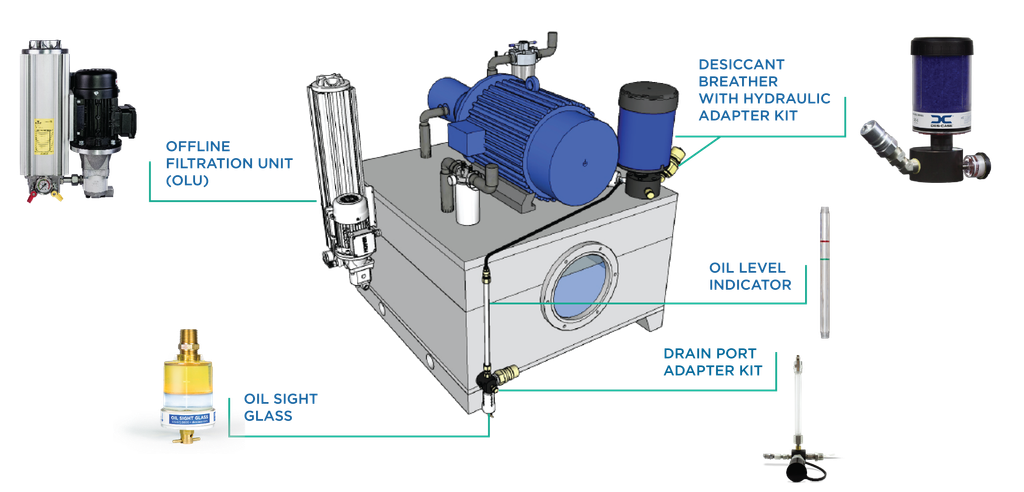
Depending on the size, orientation and type of hydraulic system, possible modifications include:
• Desiccant breather to exclude airborne particles and moisture
• Quick connects with dust caps on the drain for easy drain/fill and on the fill to add new oil
• 3-D BullsEye® or column sight glass for non-invasive level checks and Oil Sight Glass (BS&W Bowl) for enhanced visual inspections
• Oil sample port to facilitate accurate, repeatable sampling